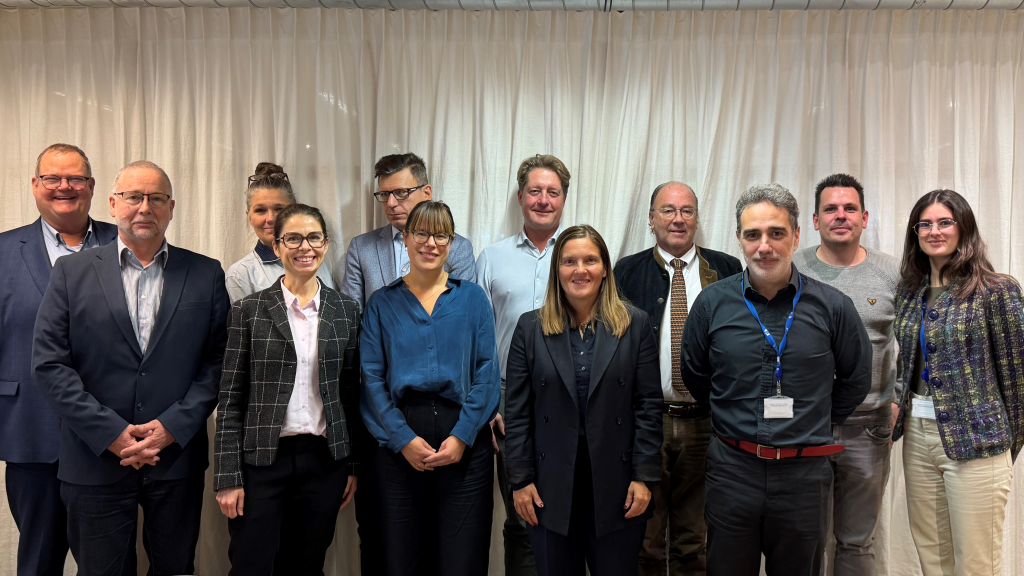
EuroWindoor Directing Council & General Assembly
EuroWindoor Directing Council & General Assembly Read More »
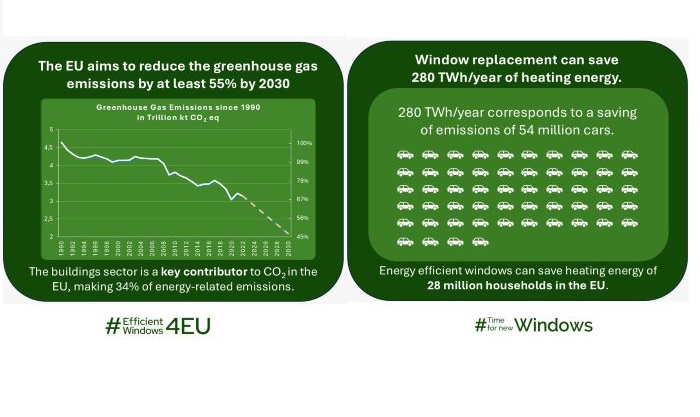
Frankfurt, January 2025 – EuroWindoor, European Aluminium, and EPPA have resumed their social media campaign to raise awareness about the role of energy-efficient windows in achieving the EU’s climate goals. The campaign, inspired by the findings of the Fraunhofer Institute for Building Physics (IBP) study, continues to share significant insights in the web.
The first post in 2025 highlights the role of energy-efficient windows reducing energy demand and achieving the EU target for greenhouse gas emissions, which by at least 55% by 2030. The buildings sector is a key contributor to CO2 in the EU, making 34% of energy-related emissions.
The second post emphasizes that window replacement can save 280 TWh/year of heating energy, which corresponds to a saving of emissions of 54 million cars. Energy efficient windows can save heating energy of 28 million households in the EU.
The campaign continues to call on EU and national decision-makers to prioritize investments in energy-efficient windows to combat climate change and improve energy performance across Europe’s building stock.
Follow the conversation on LinkedIn and join the Hashtags #EfficientWindows4EU and #TimeForNewWindows!
For more information see the campaign by yourself here.
Press Contact:
Miriam Weppler
EuroWindoor General Secretariat
Walter-Kolb-Str. 1-7
60594 Frankfurt / Germany
Phone: +49 (69) 95 50 54 – 36
Fax: +49 (69) 95 50 54 – 11
Email: GS@EuroWindoor.eu
More facts about Window Replacement Read More »
Frankfurt, January 2025 – The European Commission asked the Member States (MS) about their needs for declared U-values of windows by presenting 5 options to choose from. EuroWindoor evaluated the proposals and emphasizes the importance of balancing legislative goals with practicality, cost-effectiveness and industry fairness.
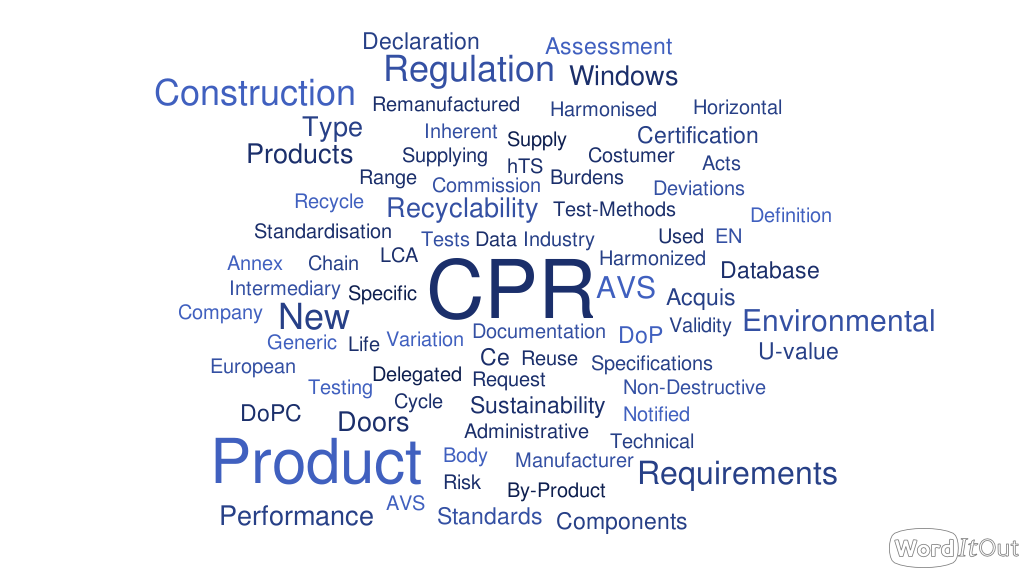
Due to the new Construction Products Regulation (CPR), MS can no longer impose requirements on essential characteristics that cannot be verified by a Declaration of Performance and Conformity (DoPC). During the Technical Acquis process for windows, the Commission identified that some MS are requesting voluntary provided U-values for actual window sizes outside of the DoP of the window manufacturer which would no longer meet the requirements of the new CPR. To address this the Commission is evaluating different options for the assessment of thermal transmittance of windows based on reference size or real size.
EuroWindoor appreciates the Commission’s proactive approach, but warns that the proposed options present challenges, particularly for SMEs and Notified Bodies. The Commission’s focus on size scaling overlooks the complexities of numerous configurations of similar windows. EuroWindoor underlines that required proofs should not have to be more precise than necessary.
To lessen the burden of SME and Notified Bodies EuroWindoor considers acceptable Option 1 (Reference sizes only) and Option 5 (Reference sizes and performance of components) if concerns about adaptability and feasibility are addressed. EuroWindoor urges policymakers to adopt solutions that reflect simplicity and cost-consciousness, ensuring the regulation remains practical while supporting the construction sector’s sustainability goals.
For more information you can find the full EuroWindoor position here.
(c) PixelAnarchy auf Pixabay
Press Contact:
Miriam Weppler
EuroWindoor General Secretariat
Walter-Kolb-Str. 1-7
60594 Frankfurt / Germany
Phone: +49 (69) 95 50 54 – 36
Fax: +49 (69) 95 50 54 – 11
Email: GS@EuroWindoor.eu
General information
General information
EuroWindoor would like to provide more input on the five options for assessing thermal transmittance based on reference size and/or actual window, as presented by the Commission in the meeting with experts of national authorities on the 3rd December 2024. This input further highlights the benefits and challenges of each approach with the intention to provide constructive solutions.
As overall we like to point out that the energy efficiency of the building is the primary focus of the legislator and that the thermal transmittance of the windows is addressed as a required input parameter. Therefore, the evaluation of the required accuracy of the products’ assessment method should also be considered at building level. A basic rule for cost-conscious and high-quality construction also follows the principle of simplicity in engineering: ‘Not as exact as possible, but as exact as necessary!’ The standardisation is also based on this principle, in that a sufficient accuracy of the values is commonly agreed, which makes practical implementation possible and affordable.
For the full position, see the following link:
EuroWindoor position on assessment of thermal transmittance based on reference size and/or actual window
(c) PixelAnarchy auf Pixabay
Frankfurt, December 2024 – 2024 has been a year of intense activity for EuroWindoor, with over 30 meetings held across various working groups to coordinate efforts and discuss the most pressing topics for the window, door and façade industry.
A major milestone was achieved this week with the publication of the revised Construction Products Regulation (CPR). The date of application is set for one year from now. Throughout the drafting process, EuroWindoor provided constructive feedback and will continue to follow the implementation closely. As an active member of the Technical Acquis Subgroup #4 for windows and doors EuroWindoor is deeply involved in preparing the basis for the new harmonised product standards which is required to implement the new CPR for these products.
Another key topic this year was the renewal of the approval for the biocidal active substance IPBC, which is essential for wood preservation in sustainable timber windows and doors with local softwood. EuroWindoor conducted two comprehensive studies that highlighted the lack of viable alternatives, underscoring the importance of ensuring the continued use of this substance in the industry.
In addition, EuroWindoor actively accompanied the implementation of the revised Energy Performance of Buildings Directive (EPBD), which was adopted earlier this year. A notable highlight was a meeting with representatives of DG ENER during the EuroWindoor Directing Council meeting in November, allowing for a productive exchange on key energy performance priorities and window replacement in the renovation wave.
As we reflect on a year of achievements, EuroWindoor extends its gratitude to its members and partners for their active participation and support. We wish everyone a joyful holiday season and a prosperous New Year.
Happy Holidays from EuroWindoor!
Press Contact:
Miriam Weppler
EuroWindoor General Secretariat
Walter-Kolb-Str. 1-7
60594 Frankfurt / Germany
Phone: +49 (69) 95 50 54 – 36
Fax: +49 (69) 95 50 54 – 11
Email: GS@EuroWindoor.eu
EuroWindoor reflects on 2024 Achievements and sends warm Holiday Wishes Read More »
Frankfurt, 18th December 2024 – The new EU Construction Products Regulation (CPR) has been officially published in the Official Journal of the European Union. This marks a significant milestone in the ongoing efforts to enhance the harmonization of construction products across the single European market.
EuroWindoor welcomes the revised CPR as a key instrument for achieving a well-functioning internal market for construction products. As a longstanding advocate for the harmonization of regulations within the EU, EuroWindoor acknowledges the importance of ensuring both practicality and proportionality in the implementation of the new rules.
In its previous comments on the draft CPR, EuroWindoor highlighted several concerns, many of which have been considered in the final revision. However, further dialogue is needed on specific points, particularly the reduction of bureaucratic burdens for made-to-measure products like windows produced in low quantities of the same product type or as unique items.
EuroWindoor emphasizes the importance of balancing regulatory goals with the needs of small and medium-sized enterprises (SMEs), advocating for practical solutions that ensure compliance without stifling innovation or competitiveness. As discussions move forward, EuroWindoor remains committed to supporting the harmonization of the construction products market while promoting a pragmatic approach to implementation.
You can find the new CPR in the OJEU here.
Press Contact:
Miriam Weppler
EuroWindoor General Secretariat
Walter-Kolb-Str. 1-7
60594 Frankfurt / Germany
Phone: +49 (69) 95 50 54 – 36
Fax: +49 (69) 95 50 54 – 11
Email: GS@EuroWindoor.eu
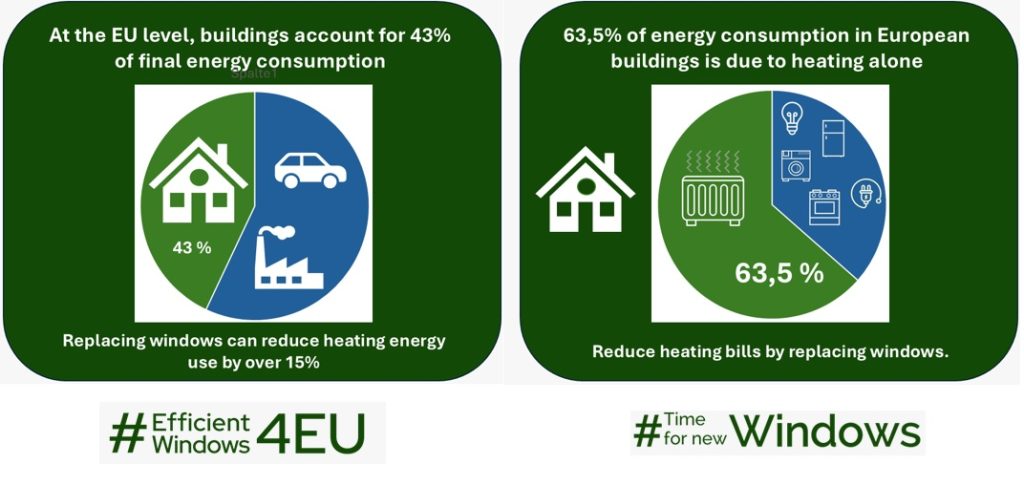
Frankfurt, December 2024 – EuroWindoor, European Aluminium and EPPA have launched a social media campaign to spotlight the findings of the Fraunhofer Institute for Building Physics IBP study on the crucial role of windows in achieving the EU’s climate targets. The campaign will run over the coming months on platforms like LinkedIn, sharing key insights through infographics.
The first post highlights that buildings account for 43% of Europe’s final energy consumption and stresses the importance of renovation. Energy-efficient windows play a vital role in reducing energy use, cutting costs and supporting urban sustainability.
The second post reveals that 63.5% of energy consumption in buildings is due to heating alone. It emphasizes that energy-efficient windows reduce heating bills and also make a big impact on sustainability.
The campaign calls on EU and national decision-makers to support investments in energy-efficient windows to improve energy efficiency and to counteract climate change.
Follow EuroWindoor on LinkedIn via https://www.linkedin.com/company/eurowindoor-aisbl and join the Hashtags #EfficientWindows4EU and #TimeForNewWindows.
Press Contact:
Miriam Weppler
EuroWindoor General Secretariat
Walter-Kolb-Str. 1-7
60594 Frankfurt / Germany
Phone: +49 (69) 95 50 54 – 36
Fax: +49 (69) 95 50 54 – 11
Email: GS@EuroWindoor.eu
Window replacements for energy efficiency: social media campaign started Read More »
Frankfurt, December 2024 – EuroWindoor has submitted its feedback to the European Commission’s survey of the feasibility study on an EU database for Construction Products, emphasizing the importance of a balanced, effective, and inclusive system.
The EuroWindoor feedback supports that manufacturers or group of manufacturers shall maintain their own databases with appropriate data backup and does not believe in an economic solution when the European Commission or IT providers will do this. The EuroWindoor approach ensures data control, security and manageability for SMEs with regard to efforts and costs. It is emphasized that the system fulfills legal requirements, industry demands and practicality for manufacturers of all sizes.
During the careful analysis of the different options for the database, EuroWindoor found numerous unresolved issues regarding the future DPP under the new Construction Products Regulation (CPR). Further talks will be held to discuss a practical implementation and the EU Commission will also be approached in this regard.
Press Contact:
Miriam Weppler
EuroWindoor General Secretariat
Walter-Kolb-Str. 1-7
60594 Frankfurt / Germany
Phone: +49 (69) 95 50 54 – 36
Fax: +49 (69) 95 50 54 – 11
Email: GS@EuroWindoor.eu
Frankfurt, November 2024 – EuroWindoor welcomed Pau Garcia Audi and Júlia Aguilera Jofre from the European Commission’s DG ENER as guests at its Directing Council meeting in Brussels to discuss about the implementation of the Energy Performance of Buildings Directive (EPBD).
One important task for DG ENER is to publish a guidance for calculation of energy performance of transparent building elements. The meeting offered EuroWindoor the opportunity to inform the Commission from first-hand about the need to take solar gains into account in an Energy Balance when determining the energy efficiency of transparent construction products. EuroWindoor provided also information on the many benefits of windows for healthier buildings and addressed difficulties in implementation of EU-Taxonomy screening criteria for curtain walling.
After the Commission representatives departed, EuroWindoor continued its work program with focus on the new Construction Products Regulation, which has just been approved by the European Council and must now be implemented via new product standards. The meeting was highly productive, reinforcing EuroWindoor’s commitment to advancing energy-efficient building practices in Europe.
Press Contact:
Miriam Weppler
EuroWindoor General Secretariat
Walter-Kolb-Str. 1-7
60594 Frankfurt / Germany
Phone: +49 (69) 95 50 54 – 36
Fax: +49 (69) 95 50 54 – 11
Email: GS@EuroWindoor.eu
Frankfurt, November 2024 – EuroWindoor has submitted feedback to the ECHA consultation on the availability of alternatives to IPBC supporting the continued authorization of IPBC in wood preservation, highlighting the current lack of suitable alternatives as well as its safety and essential role in wood protection for construction.
IPBC is widely used across Europe, making it an essential component for wood protection. EuroWindoor commissioned studies — by Ramboll on non-chemical alternatives and by DHI on chemical alternatives — illustrate the lack of suitable substitutes. Available alternative active substances fall short on essential criteria, including efficacy against fungi, non-corrosiveness with metal components, and compatibility with protective coatings. Moreover, no biocidal products authorized at a national level across 28 EU countries currently meet the necessary standards for wooden windows and doors.
As a sustainable, energy-saving material, wood offers unique benefits for construction. Wooden components, when manufactured and protected properly, are durable, dimensionally stable, and contribute to a pleasant, high-quality living environment. To conserve functional safety and long service life, most of the domestic wood has to be protected against structural damages caused by wood-destroying organisms (insects, fungi) and needs protective measures against wood-discolouring fungi (sapstain).
IPBC’s reauthorization is essential to support the wood sector’s contribution to the EU’s carbon reduction goals in construction by 2050. EuroWindoor urges ECHA to consider these findings and the significant role of IPBC in preserving wood materials while allowing the sector to continue advancing sustainable practices.
For more information on the complete EuroWindoor feedback click here.
Press Contact:
Miriam Weppler
EuroWindoor General Secretariat
Walter-Kolb-Str. 1-7
60594 Frankfurt / Germany
Phone: +49 (69) 95 50 54 – 36
Fax: +49 (69) 95 50 54 – 11
Email: GS@EuroWindoor.eu
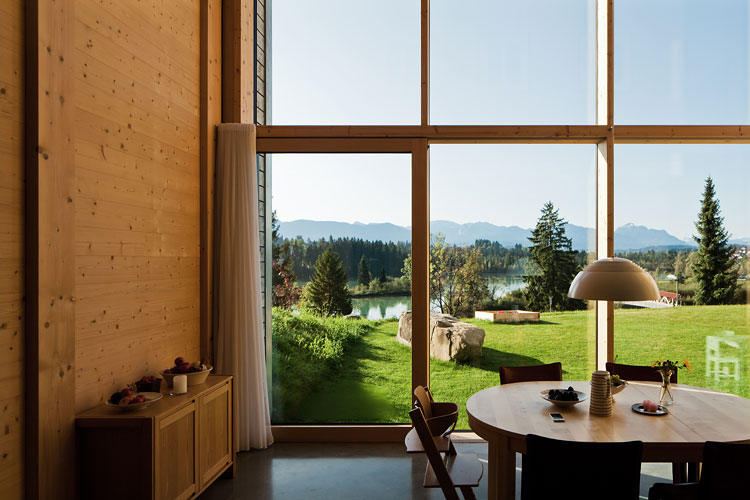
(c) Fensterhersteller: wipfler fenster + fassaden gmbh
Architektur: Pflanzelt Architekten
Fotografie: Christian Flatscher
General information
The window and door industry must live up to very high-quality standards to maintain the integrity, the stability and the visual appeal of the products throughout a long lifespan. It specifically relies on biocidal substances to protect against wood-damaging agents like fungi and mould. One of the most effective substances to protect wood from discolouring fungi is IPBC (3-Iodo-2-propynyl butylcarbamate) which is used in more than 70% of biocidal products authorized in Product-Type 8 (719 out of 1021 products1) and has become a well-controlled industry standard.
Given its critical role in preserving wood, particularly in the context of wood exposed to moisture or outdoor conditions (i.e. windows and door), the industry currently faces challenges in identifying equally effective alternatives. In the context of this Public Consultation, it is imperative to address why IPBC should continue to be authorized, particularly considering insufficient alternatives for the wooden window and door industry.
For the full feedback, see the following link:
EuroWindoor feedback to the public consultation on IPBC
(c) Fensterhersteller: wipfler fenster + fassaden GmbH
Architektur: Pflanzelt Architekten
Fotografie: Christian Flatscher
EuroWindoor feedback to the public consultation on IPBC (November 2024) Read More »
Overview on EuroWindoor’s activities
1. EuroWindoor welcomes the rule for use of recovered post-consumer rigid PVC in plastic profiles of electrical windows and doors
2. The role of windows in the renovation wave to achieve the EU’s climate targets
3. EuroWindoor recommends measures for Unlocking Private Investment in Energy Efficiency
4. The European Window Stakeholders welcome the European Parliament plenary vote on the Energy Performance of Buildings Directive
5. Personalia: New Executive Board of EuroWindoor elected
6. Successful EuroWindoor Directing Council meeting held in Helsinki
7. EuroWindoor welcomes the Polish Window and Door Association (POiD) as new member
8. EuroWindoor clarifies questions about the new CPR with DG GROW
9. Appointments 2024/2025
Newsletter 07/2024 Read More »
Frankfurt, July 2024 – EuroWindoor supports Regulation 1025/2012/EU in a public evaluation noting no need for changes are necessary. Current problems in the systems like the backlog in harmonised European Standards (hENs) are linked to issues between European Standardisation Organisations (ESOs) and the European Commission (EC), not the Regulation itself.
The CPR Acquis process has helped mitigate these issues, but EuroWindoor pin points the need for stable templates and agreed timelines for all stakeholders. Frequent changes in guidance and templates, especially for product standards of construction products, cause delays and require additional time for modifications.
EuroWindoor advocates for ample time for standardisation committees to develop high-quality standards by consensus and suggest saving time in formal processes like translation and voting. The EOTA route ensures timely market entry for innovative construction products.
Overall, EuroWindoor believes Regulation 1025/2012 has generally no need to change. The main challenges and problems related to developing in a timely manner harmonized standards for construction products will be solved via the new CPR.
For more information on the complete EuroWindoor feedback click here.
Press Contact:
Miriam Weppler
EuroWindoor General Secretariat
Walter-Kolb-Str. 1-7
60594 Frankfurt / Germany
Phone: +49 (69) 95 50 54 – 36
Fax: +49 (69) 95 50 54 – 11
Email: GS@EuroWindoor.eu
EuroWindoor feedback on the European Standardisation Regulation Read More »
EuroWindoor appreciates the opportunity to give the Commission feedback to the public consultation that is being conducted as part of the evaluation of Regulation (EU) 1025/2012 in
response to the EU strategy on standardisation presented by the European Commission (COM(2022) 31).
The European Standardisation System (ESS) provides the framework for requesting EU standards and
standardisation deliverables in support of EU public policy and legislative needs, covering a wide range of
industrial ecosystems.
The evaluation assesses the performance of the ESS in the evolving landscape of technical
standardisation. It determines whether the existing framework is adequate and capable of delivering
standards and technical specifications to support EU policy and legislative needs, while also maintaining
global relevance.
For the full feedback, see the following link:
EuroWindoor feedback to the evaluation of Regulation (EU) No 1025_2012 on European Standardisation
EuroWindoor feedback on the European Standardisation Regulation (June 2024) Read More »
On 21st June 2024, EuroWindoor held a productive meeting with representatives of DG GROW going through a list of questions regarding the implementation of the new Construction Products Regulation (CPR). The new regulation contains numerous changes and new challenges that manufacturers will have to understand, enabling them to comply in the future.
Due to the great importance of the regulation for the construction industry, EuroWindoor started the process at an early stage, even though the publication of the CPR is expected not before Autumn 2024. Many of the questions are important for the necessary adaptation in a practical manner of product standards, which need to be published first before the new rules enter into force in a few years’ time.
The meeting was highly fruitful, providing much-needed clarity on several issues for both parties involved. EuroWindoor emphasized its commitment to staying in contact with the European Commission and offered its expertise for any future consultations and discussions that are to be expected on the long road ahead of us.
Press Contact:
Miriam Weppler
EuroWindoor General Secretariat
Walter-Kolb-Str. 1-7
60594 Frankfurt / Germany
Phone: +49 (69) 95 50 54 – 36
Fax: +49 (69) 95 50 54 – 11
Email: GS@EuroWindoor.eu
EuroWindoor clarifies questions about the new CPR with DG GROW Read More »
Helsinki, June 2024 – POiD becomes a new member association of EuroWindoor following the decision made at the Directing Council meeting on 11th June 2024. The Polish Window and Door Association (POiD) is representing manufacturers and distributors in Poland’s window and door industry, known for promoting high standards of quality and innovation.
EuroWindoor appreciates POiD strengthening EuroWindoor in its mission of contributing to the EU’s commitments regarding better regulation, job creation, energy security and resource efficiency without imposing unnecessary burdens on the sector. With POiD, EuroWindoor now counts 19 member associations from 15 European countries.
This new membership highlights EuroWindoor’s continuous efforts to expand and reinforce its network across Europe, ensuring diverse representation and collaboration within the window industry to tackle common challenges and advance shared goals.
Press Contact:
Miriam Weppler
EuroWindoor General Secretariat
Walter-Kolb-Str. 1-7
60594 Frankfurt / Germany
Phone: +49 (69) 95 50 54 – 36
Fax: +49 (69) 95 50 54 – 11
Email: GS@EuroWindoor.eu
EuroWindoor welcomes the Polish Window and Door Association (POiD) as new member Read More »
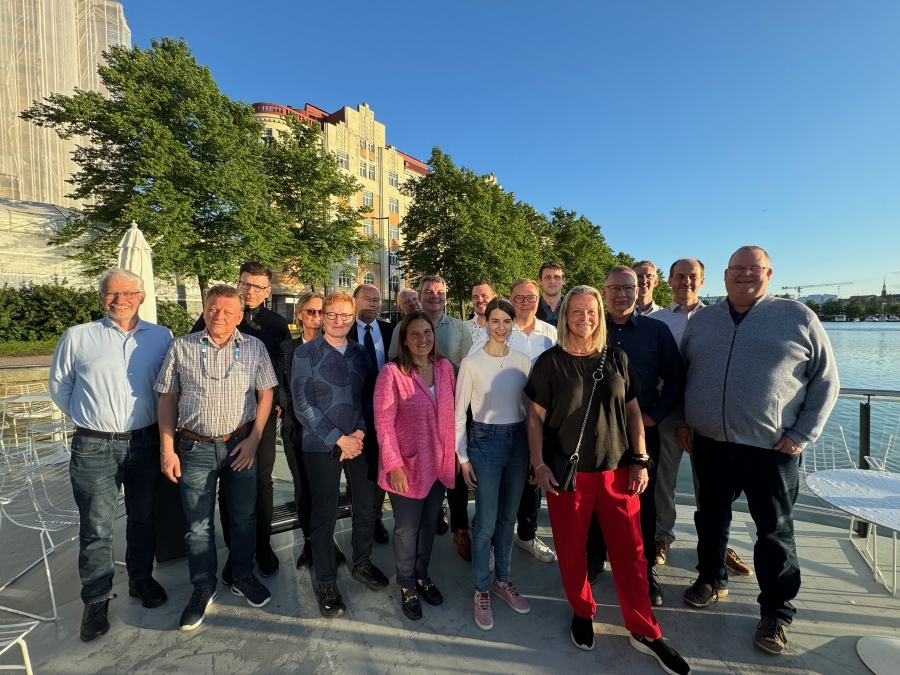
Helsinki, June 2024 – EuroWindoor members met in Helsinki, Finland to talk about latest European the development and to share information on activities on national level impacting the window sector.
EuroWindoor welcomed distinguished guests from the Latvian Window Association (LLDRA) and from the Polish Windows and Doors Association (POiD). Notably, POiD had submitted their membership application prior to the meeting which has been approved by the Directing Council.
One focus of the meeting was on the exchange of the latest legal developments affecting windows at the national level and market trends. This exchange shows the importance of cooperation and information sharing to drive the industry forward. In addition, the latest work of EuroWindoor has been reviewed as well to move forward in the upcoming months that will be busy with the newly elected European Parliament.
Overall, the meeting reinforced EuroWindoor’s mission contributing to the EU’s commitment regarding better regulation as well as job creation, energy security, resource efficiency and carbon emission reductions without imposing unnecessary burdens on the sector.
Press Contact:
Miriam Weppler
EuroWindoor General Secretariat
Walter-Kolb-Str. 1-7
60594 Frankfurt / Germany
Phone: +49 (69) 95 50 54 – 36
Fax: +49 (69) 95 50 54 – 11
Email: GS@EuroWindoor.eu
Successful EuroWindoor Directing Council meeting held in Helsinki Read More »
1. EuroWindoor website in a new and fresh design
2. EuroWindoor advocates for more clarity and a better alignment in the PFAS restriction proposal
3. EuroWindoor advocates for strengthening Harmonized Standards
4. EuroWindoor’s Directing Council meeting highlights developments in Brussels
5. Recent news on wood preservatives – Renewal of Propiconazole’s approval published in recent Commission’s implementing decision
6. EuroWindoor welcomes provisional Agreement on the Energy Performance of Buildings Directive
7. EuroWindoor reflects on a productive year 2023 and wishes happy holidays
8. Appointments 2024
Newsletter 12/2023 Read More »
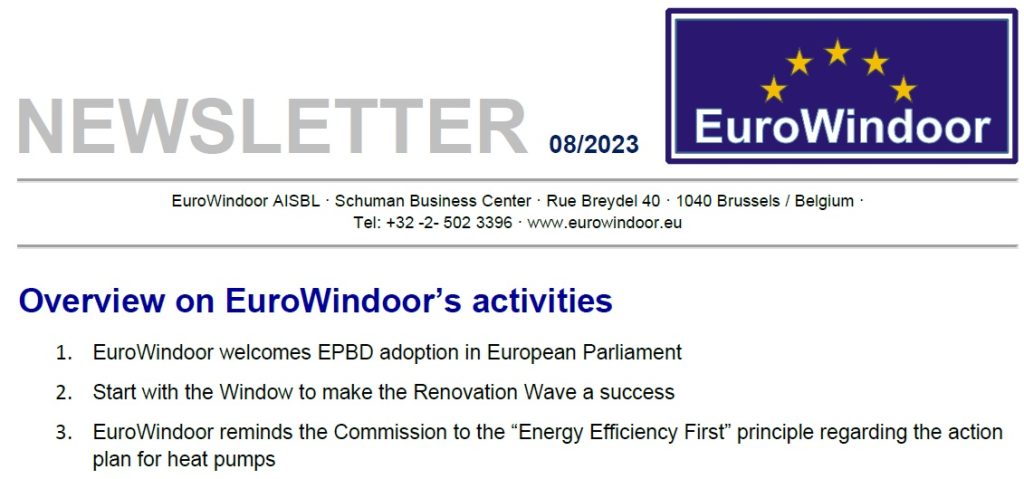
1. EuroWindoor welcomes EPBD adoption in European Parliament
2. Start with the Window to make the Renovation Wave a success
3. EuroWindoor reminds the Commission to the “Energy Efficiency First” principle regarding the action plan for heat pumps
4. EuroWindoor advocates for alignment and clarification in the RoHS exemption for PVC windows and doors
5. EuroWindoor looks back on a busy first half of 2023
6. Appointments 2023/2024
Newsletter 08/2023 Read More »
Frankfurt, March 2024 – EuroWindoor is set to welcome interested manufacturers and associations to meet up at the Fensterbau Frontale fair in Nuremberg from 19th to 22nd March. The Fensterbau Frontale, the world’s largest trade fair for the window, door and façade construction industry, is the perfect opportunity to connect with EuroWindoor at Hall 1, Booth 1-619.
EuroWindoor is available for discussions and insights into the latest developments shaping the fenestration sector on European level. This presents a vital chance for stakeholders to engage with EuroWindoor, exchange ideas, and explore potential collaborations.
For more information click here.
Press Contact:
Miriam Weppler
EuroWindoor General Secretariat
Walter-Kolb-Str. 1-7
60594 Frankfurt / Germany
Phone: +49 (69) 95 50 54 – 36
Fax: +49 (69) 95 50 54 – 11
Email: GS@EuroWindoor.eu
The European Green Deal aims to achieve carbon neutrality by 2050. As buildings account for 43 % of final energy consumption in the EU, mostly for heating, reducing GHG for heating buildings is an important aim of the energy policy in the EU [1].
With the new version of the EPBD (Energy Performance of Buildings Directive)[2], the EU Commission intends to phase out fossil fuel in heating and coolingin new buildings and in buildings undergoing major renovation or heating system replacement. The initial proposal for a recast regulation (Building Energy Act [3]) in Germany, according to which each newly installed heating system must be powered by at least 65 % renewable energy from January 2024, has raised a strong public debate in 2023. The role of energy efficiency measures in the building sector has rarely been explored in this public discussion, even though the Building Energy Act (BEA) not only regulates heating systems, but also the energy efficiency of the building envelope.
This highly politicized debate in Germany has, on the one hand, created the impression that relying solely on new renewable heating systems can drive the decarbonization in buildings. On the other hand, the limited number of heating technologies that meet the requirements of the BEA and different consumer experiences contribute to uncertainty among building owners. This often leads to delays in implementing energy efficiency measures and replacing heating systems, both of which are crucial to achieving the goals of the European Green Deal.
Recognizing that the focus of this discussion should be on scientific facts rather than on any public political awareness, EPPA (European Trade Association of PVC Window System Suppliers), European Aluminium Association and EuroWindoor engaged Fraunhofer IBP to conduct a comprehensive literature review of key research studies addressing the economic, societal and other multiple aspects of energy efficient renovation and the renewable energy use. Additionally, the role of windows in the context of the entire building envelope in energy efficient building renovation is to be identified from the existing research studies.
The first objective of this project is to provide an overview of the state of knowledge on the multiple impacts of energy efficient measures (demand side) and the use of renewable energy (supply side) in the building sector to achieve the zero-emission for heating in buildings. The second objective of this project is to present a comprehensive literature analysis of the contribution of windows to energy efficient renovations of building envelopes in the EU.
For the full article follow the link:
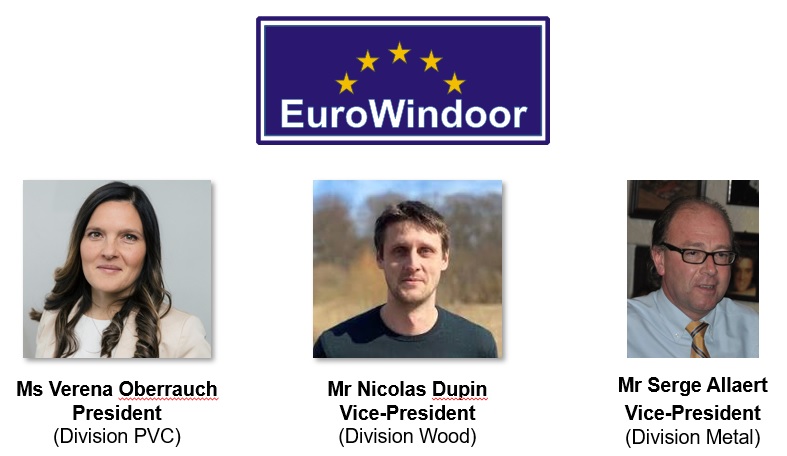
Brussels, March 2024 – EuroWindoor members elected unanimously during the General Assembly a new Executive Board for the next 3-year term of office. The international non-profit association with seat in Brussels has witnessed both continuity and fresh leadership with the re-election of Verena Oberrauch (Member of the board of directors of Finstral AG, Unterinn / Italy) as President and Nicolas Dupin (Regulatory Affairs Advisor at VELUX A/S, Hørsholm / Denmark) as Vice-President. Serge Allaert (Owner of Allaert Aluminium, Harelbeke / Belgium) joins the Board as newly elected Vice-President. Each member of the Executive Board represents a material group affiliated to the association, which is division plastics by Verena Oberrauch, division wood by Nicolas Dupin and division metal by Serge Allaert.
EuroWindoor honours Franz Hauk (Shareholder of F.R. Hauk Stahl- und Leichtmetallbau GmbH, Berlin / Germany) who retires as Vice-president after nine years of dedicated service on the Executive Board and over three decades contributing to the European window associations. The EuroWindoor members express their gratitude for his invaluable contributions and appointed him as Honorary President of EuroWindoor.
EuroWindoor looks forward to continued collaboration and advancements under the leadership of Verena Oberrauch, Nicolas Dupin and Serge Allaert. The collective expertise of the Executive Board members ensures that EuroWindoor remains at the forefront of driving innovation and excellence in the European fenestration industry.
Press Contact:
Miriam Weppler
EuroWindoor General Secretariat
Walter-Kolb-Str. 1-7
60594 Frankfurt / Germany
Phone: +49 (69) 95 50 54 – 36
Fax: +49 (69) 95 50 54 – 11
Email: GS@EuroWindoor.eu
Personalia: New Executive Board of EuroWindoor elected Read More »
Brussels, 12 March – The European associations ARGE, European Aluminium, EPPA, ES-SO, EuroWindoor and Glass for Europe welcome the positive plenary vote in the European Parliament on the revised Energy Performance of Buildings Directive (EPBD). Today’s adoption represents an important step towards the final adoption of the revised text as it confirms the European Parliament’s commitment to accelerate ambitious renovations towards a zero-emission building stock by 2050.
The European Window Stakeholders support the strengthened focus of the EPBD on renovation, setting a stronger framework for energy performance requirements for new and existing buildings, pushing Member States to prioritise energy renovations. While the European Window Stakeholders have advocated for more ambitious Minimum Energy Performance Standards (MEPS) for residential and non-residential buildings – the agreed framework represents a balanced compromise, which – if implemented correctly at Member State level – has the potential to start a European renovation wave among the worst performing buildings, improving their energy efficiency, CO2 emissions and indoor climate. It represents a first step in the right direction to reach its 2030 and 2050 climate targets but also improve the overall comfort of living conditions.
For the full article follow the link:
Brussels, 12 March – The European associations ARGE, European Aluminium, EPPA, ES-SO, EuroWindoor and Glass for Europe welcome the positive plenary vote in the European Parliament on the revised Energy Performance of Buildings Directive (EPBD). Today’s adoption represents an important step towards the final adoption of the revised text as it confirms the European Parliament’s commitment to accelerate ambitious renovations towards a zero-emission building stock by 2050.
The European Window Stakeholders support the strengthened focus of the EPBD on renovation, setting a stronger framework for energy performance requirements for new and existing buildings, pushing Member States to prioritise energy renovations. While the European Window Stakeholders have advocated for more ambitious Minimum Energy Performance Standards (MEPS) for residential and non-residential buildings – the agreed framework represents a balanced compromise, which – if implemented correctly at Member State level – has the potential to start a European renovation wave among the worst performing buildings, improving their energy efficiency, CO2 emissions and indoor climate. It represents a first step in the right direction to reach its 2030 and 2050 climate targets but also improve the overall comfort of living conditions.
That’s why we also particularly support the broader focus of the EPBD, now allowing to better factor in Indoor Environmental Quality (IEQ) in buildings, including improved temperature, humidity, indoor air quality, daylight and acoustics for the occupants’ well-being. Our members have many best practice examples to feed into the upcoming work.
Once adopted, strong and clear guidelines by the European Commission are cruial to ensure the correct implementation at national level. We look forward to closely supporting this upcoming implementation phase, to ensure the revised EPBD aligns with the industry’s commitment to sustainability, energy efficiency, and human-centric building practices. The upcoming work by the Commission on guidelines for the calculation of the energy performance of transparent building elements, which form part of the building envelope, will be particularly important as well as an updated methodology for defining cost-optimal levels for minimum energy performance requirements. The European Window Stakeholders are ready to support this work, providing data and industry experience, both at EU and national level and via the Concerted Action EPBD process.

Press Contact:
Miriam Weppler
EuroWindoor General Secretariat
Walter-Kolb-Str. 1-7
60594 Frankfurt / Germany
Phone: +49 (69) 95 50 54 – 36
Fax: +49 (69) 95 50 54 – 11
Email: GS@EuroWindoor.eu
Frankfurt, February – EuroWindoor appreciates the Commission initiative for unlocking private investment in Energy Efficiency and emphasizes the need for a balanced adjustment of political instruments, especially within the building sector, advocating for predictable alignment with long-term frameworks for grants, financial incentives, and market-based measures like CO2 emissions pricing.
The EuroWindoor feedback on Call for Evidence for Unlocking Private Investment in Energy Efficiency highlights the insufficiency of current funding measures to mobilize private investment, citing Europe’s alarmingly low renovation rate. Strongly supporting a significant increase of subsidy for renovation costs or tax incentives, the association proposes a 30-40% range for energy-efficient renovations to incentivize private owners effectively.
The feedback stresses also the importance of stability of subsidy programmes in the construction sector, noting the negative impact of low continuity. EuroWindoor proposes measures, including special tax write-offs, low-interest government loans, and attractive subsidies.
Additionally, EuroWindoor emphasizes preventing the passing on of state-subsidized renovation costs to renters and recommends a simplified subsidy processing system. EuroWindoor proposes an information campaign to highlight the energy and health benefits of energy-efficient buildings.
The feedback underscores the critical role of enhanced policies and funding mechanisms in promoting energy efficiency in the building sector, aligning with broader EU goals for sustainable construction practices.
The EuroWindoor feedback on the Call for Evidence for Unlocking Private Investment in Energy Efficiency here.
Press Contact:
Miriam Weppler
EuroWindoor General Secretariat
Walter-Kolb-Str. 1-7
60594 Frankfurt / Germany
Phone: +49 (69) 95 50 54 – 36
Fax: +49 (69) 95 50 54 – 11
Email: GS@EuroWindoor.eu
EuroWindoor recommends measures for Unlocking Private Investment in Energy Efficiency Read More »
EuroWindoor appreciates the opportunity to give the Commission feedback to the Call for Evidence on the current guidelines for mobilising private energy efficiency investments according to Article 30 Paragraph 10 under the EU Energy Efficiency Directive.
The activation of private investment in energy-efficient measures requires a balanced adjustment of the relevant political instruments, especially in the building sector. Plannable regulatory requirements must be dovetailed with a reliable and long-term framework for grants and financial incentives and backed up with market-based measures like the pricing of CO2 emissions.
In this article, we present a literature study by the Fraunhofer Institute for Building Physics IBP. In addition to a holistic approach, the renowned institute has focused on the role of window replacement to improve the energy efficiency of existing buildings. The window industry, represented by the European Aluminium aisbl, EuroWindoor aisbl and EPPA ivzw, commissioned this study to counter the general view that renewable energy sources are sufficient to cover the future energy requirements of buildings without the need for additional energy efficiency measures. In fact, both are important!
Background and objective
The aim of the measures defined in the European Green Deal is to transform the European Union into a climate-neutral continent by 2050. In this context, the building sector is an important influencing factor, accounting for around 43 % of final energy consumption in the EU, primarily for heating purposes.
The reduction of greenhouse gas emissions for heating buildings is therefore a priority of EU energy policy[1]. With the revision of the Energy Performance of Buildings Directive (EPBD)[2], the EU Commission intends to phase out the use of fossil fuels for heating and cooling in new buildings and in buildings undergoing major refurbishment or whose heating systems are being replaced.
In Germany, the first draft of a new regulation (Building Energy Act – GEG)[3] led to a public debate, particularly about the proportion of renewable energy to be used for new heating systems from January 2024. However, the relevance of additional energy efficiency measures was neglected in this discussion, although the GEG also provides for the energy efficiency of the building envelope in addition to the technical (heating) options.
In order to gain a better understanding of these issues, the Fraunhofer IBP has attached particular importance to this and, among other things, analyzed the economic and social aspects of energy-efficient renovation and identified the role of window replacement in the overall savings potential.
Summary of the results
The study shows that improving the energy efficiency of buildings, for example by replacing windows, is just as important as the use of heating and cooling systems based on renewable energy. In addition, the energy and economic efficiency of such heating (and cooling) systems is heavily dependent on the energy efficiency of the buildings. Therefore, financial incentives to improve the energy efficiency of the building stock should be created equally for all the measures mentioned.
The most important driver in terms of energy efficiency regarding the building envelope is the replacement of the single and double-glazed windows still frequently used in existing buildings with U-values that are significantly higher than modern window solutions. This is also an important driver of the planned decarbonisation measures.
(…) If these windows were replaced, significant energy efficiency potential could be realized (…)[4], according to the authors. For example, a window replacement rate of 1 % over a period of ten years with modern windows with U-values between 0.9 and 1.3 W/m²K would result in energy savings of 3.5 % in Central Europe. This savings potential also depends on the climate region and the typical U-values of the local conditions in the individual member states. The savings potential is highest in the Baltic countries at 4.5 % and lowest in the southern countries at 2.1 %. If all buildings in the EU were fitted with high-performance windows, 31% of the energy consumed annually could be saved.[5]
In addition to technical measures such as insulating the building envelope, insulating pipework, reducing thermal bridges and increasing airtightness, upgrading or replacing heating systems and recovering heat from exhaust air, there is great potential for reducing greenhouse gases, particularly in the use of renewable energies on the supply side.
Furthermore, and this is a special feature, the study looks at the reasons for renovation. The triggers for energy-efficient renovations are necessary maintenance measures or the replacement of defective components and the desire to counteract health problems. Other motivations for energy-efficient renovations include improving the property, saving energy costs and environmental considerations as well as thermal, visual and acoustic comfort.
It is intended to present the literature study as part of the Fensterbau Frontale forum
More information:
Sources:
[1] European Commission: Completion of key “Fit for 55” legislation. Available at: https://ec.europa.eu/commission/presscorner/detail/en/ip_23_4754. Accessed October 29, 2023.
[2] European Parliament: energy performance of buildings (recast): P9TA(2023)0068: Amendments adopted by the European Parliament on 14 March 2023 on the proposal for a directive of the European Parliament and of the Council on the energy performance of buildings (recast) (COM(2021)0802 – C9-0469/2021 – 2021/0426(COD))1.
[3] Press and Information Office of the Federal Government: Climate-friendly heating: new Building Energy Act to be implemented. Available at: https://www.bundesregierung.de/breg-en/issues/new-building-energy-act-2185010. Accessed October 29, 2023.
[4] Glass for Europe: Glazing Potential, 2019.
[5] Glass for Europe: Glazing Potential, 2019.
Press Contact:
Miriam Weppler
EuroWindoor General Secretariat
Walter-Kolb-Str. 1-7
60594 Frankfurt / Germany
Phone: +49 (69) 95 50 54 – 36
Fax: +49 (69) 95 50 54 – 11
Email: GS@EuroWindoor.eu
The role of windows in the renovation wave to achieve the EU’s climate targets Read More »
Brussels, January 2024 – EuroWindoor is pleased with the harmonisation of requirements according to the RoHS directive with REACH regulation for the use of profiles in electrical and electronic windows and doors containing recovered rigid polyvinyl chloride (PVC). This brings a long process to a positive conclusion which was introduced by an exemption request from EuroWindoor and EPPA in the year 2015.
While REACH applies to all substances, mixtures and articles, RoHS only applies for electrical and electronic products. The aim in restricting the use of certain hazardous materials is to reduce the environmental impact of electronic waste and improve the safety of electronic products. Windows and doors are falling under REACH and additionally RoHS when they have electrical equipment attached or integrated which did cause difficulties in the past because of different requirements.
Supporting circular economy the Commission Delegated Directive (EU) 2024/232 for RoHS (published in January 2024) is aligning the rules of the REACH derogation of Commission Regulation (EU) 2023/923 allowing the use of recovered rigid PVC material when it does not exceed 0,1 % cadmium by weight and 1,5 % lead by weight. So recycled PVC material can also be used in profiles for electrical windows and doors.
Only a small issue remains because of the differing validity periods outlined in the RoHS Delegated Directive compared to the REACH derogation. While the REACH derogation is set to expire in May 2033, RoHS expiry date is set to May 2028. To avoid future conflicts EuroWindoor strongly advocates to ensure that there will be a renewal of the Commission Delegated Directive in 2028 to keep RoHS aligned with REACH. Furthermore EuroWindoor continuous to recommends limiting the scope of RoHS to the electrical device of windows and doors for avoiding double regulation.
For more information see:
Press Contact:
Miriam Weppler
EuroWindoor General Secretariat
Walter-Kolb-Str. 1-7
60594 Frankfurt / Germany
Phone: +49 (69) 95 50 54 – 36
Fax: +49 (69) 95 50 54 – 11
Email: GS@EuroWindoor.eu
In the meeting of SG#4 on 7th November 2023 the EC referred to the annexes of the new CPR
(in particular Annex I). The experts were invited to send feedback about possible product inherent
safety requirements to be considered until 15th December 2023.
The following feedback from EuroWindoor for windows (Family III), doorsets (Family I) and
rooflights (Family V) is based on the CPR Proposal COM(2022)144final dated 30.3.2022.
EuroWindoor input for declaration of Uw values of windows based on reference size
Frankfurt, December 2023 – As we bid farewell to 2023, EuroWindoor takes a moment to reflect on the milestones achieved in the year. Amidst the ongoing global challenges, EuroWindoor continued its commitment to actively contribute to crucial discussions and initiatives that shape the future of the window and door sector.
A notable highlight of 2023 is the success with the renewal of the approval for Propiconazole, an active substance in wood preservatives required for wooden windows and doors. EuroWindoor’s active engagement helped securing the substance’s continued use until November 2030 providing the industry time to explore alternative solutions.
The intense active involvement of EuroWindoor in the Technical Acquis process of the CPR is an example for our dedication to ensure useful standards for the market. Simultaneously, EuroWindoor advocates that the market is not overregulated and the industry not overburdened.
There were many topics EuroWindoor provided input like the Taxonomy Climate Delegated Act, the restriction proposal for the use of PFAS and the proposal for the exemption for cadmium and lead in plastic profiles in electrical and electronic windows and doors containing recovered rigid PVC.
EuroWindoor is closely observing many legislative processes and is anticipating the final version of the Energy Performance of Buildings Directive.
Looking ahead to 2024, EuroWindoor remains dedicated to providing valuable insights, participating in essential consultations and collaborating with key stakeholders. Warm holiday wishes to all EuroWindoor members, partners, friends and stakeholders. Here’s to a new year filled with growth, opportunities, and collective achievements. Happy Holidays and a Happy New Year!
Press Contact:
Miriam Weppler
EuroWindoor General Secretariat
Walter-Kolb-Str. 1-7
60594 Frankfurt / Germany
Phone: +49 (69) 95 50 54 – 36
Fax: +49 (69) 95 50 54 – 11
Email: GS@EuroWindoor.eu
EuroWindoor reflects on a productive year 2023 and wishes happy holidays Read More »
EuroWindoor, the European association of windows, doors and façade manufacturers, welcomes the recent provisional agreement on the revised Energy Performance of Buildings Directive (EPBD). The agreement, part of the ‘Fit for 55’ initiative, signals a much-needed commitment to more ambitious renovations for a zero-emission building stock by 2050.
EuroWindoor is optimistic about the revised directive’s focus on renovation, acknowledging its important role in lowering the environmental impact of buildings. The proposed agreement sets a clear framework for energy performance requirements for new and existing buildings, pushing member states to prioritize energy renovations. This includes that all new buildings should be zero-emission by 2030, with existing building stock targeted to achieve the same by 2050. We also strongly support the broader focus of the EPBD, allowing to better factor in Indoor Environmental Quality (IEQ) in buildings EuroWindoor asserts that buildings should not only be energy-efficient but also provide a high quality of life, emphasizing good air quality and daylight for occupant well-being.
While welcoming the commitment, EuroWindoor is advocating for more ambitious minimum energy performance requirements for residential and non-residential buildings in the form of Minimum Energy Performance Standards (MEPS) to reach the 2030 and 2050 targets.
As the provisional agreement moves towards formal adoption, EuroWindoor looks forward to providing future input, particularly in the implementation phase at Member State level, to ensure the revised EPBD aligns with the industry’s commitment to sustainability, energy efficiency, and human-centric building practices.
EuroWindoor comment on the Renovation Wave: why to #startwiththewindow.
Press Contact:
Miriam Weppler
EuroWindoor General Secretariat
Walter-Kolb-Str. 1-7
60594 Frankfurt / Germany
Phone: +49 (69) 95 50 54 – 36
Fax: +49 (69) 95 50 54 – 11
Email: GS@EuroWindoor.eu
Frankfurt, December 2023 — EuroWindoor has been closely monitoring the renewal process of Propiconazole – for its use in Product Type 8 – for the past 3 years. Propiconazole is an Active Substance use in wood preservatives to prevent the development of wood-rotting and wood-discolouring fungi, widely used in the wooden windows and door industry.
Due to a reclassification in 2018, the substance fell under an exclusion criteria – in theory banning its use for wood preservatives according to the BPR – which threatened the entire wood industry for all outdoor applications, including windows and doors. The sector has until now no equivalent alternative to Propiconazole to efficiently protect wood from decay, but EuroWindoor is expecting reliable alternative to be available on European market by 2028.
Multiple industry leaders have been working on identifying and testing potential alternatives for several years now, but efficacy test require a 5-years exposure under extreme weather conditions before being approved for use in the industry.
This situation has led EuroWindoor to raising awareness toward authorities by reaching out to the Biocidal Product Committee (BPC), the European Commission as well as representatives from European Member States. EuroWindoor also organized a webinar for experts involved in the renewal process of Propiconazole, published several analysis highlighting the absence of suitable alternatives, and answered two public consultations (link 1 and link 2) to reflect the industry’s need for an extension of Propiconazole’s approval to find robust alternatives.
After a 3-years process and 3 consequence administrative prolongations to allow for in-depth risk analysis, the European Commission has recently published an Implementing Decision to renew the approval of Propiconazole until November 2030 for its use in wooden windows and doors (Use Class 2, Use Class 3.1 and Use Class 3.2).
This decision was welcomed by the industry as it will give the sector enough time to thoroughly test and implement alternative solutions in due time. EuroWindoor recommend manufacturers who have not net started to test alternative solutions (e.g. based on the substance Penflufen) to immediately start doing so in order to secure solutions compatible with local needs.
EuroWindoor is still closely monitoring the enforcement of this implementing decision, especially labelling of treated articles (see Annex of Implementing Decision (EU) 2023/2596) and will keep informing its members of the conditions for the labelling.
Press Contact:
Miriam Weppler
EuroWindoor General Secretariat
Walter-Kolb-Str. 1-7
60594 Frankfurt / Germany
Phone: +49 (69) 95 50 54 – 36
Fax: +49 (69) 95 50 54 – 11
Email: GS@EuroWindoor.eu
You are currently viewing a placeholder content from Vimeo. To access the actual content, click the button below. Please note that doing so will share data with third-party providers.
More InformationYou are currently viewing a placeholder content from YouTube. To access the actual content, click the button below. Please note that doing so will share data with third-party providers.
More InformationYou need to load content from reCAPTCHA to submit the form. Please note that doing so will share data with third-party providers.
More InformationYou are currently viewing a placeholder content from Facebook. To access the actual content, click the button below. Please note that doing so will share data with third-party providers.
More InformationYou are currently viewing a placeholder content from Instagram. To access the actual content, click the button below. Please note that doing so will share data with third-party providers.
More InformationYou are currently viewing a placeholder content from X. To access the actual content, click the button below. Please note that doing so will share data with third-party providers.
More Information